
The Gallery: Paintings
Gallery Home | Paintings | Mixed Media | More Mixed Media | Photography |
Poetry | Prose | Drawings | Textiles | Paper Arts | Sculpture | Music |
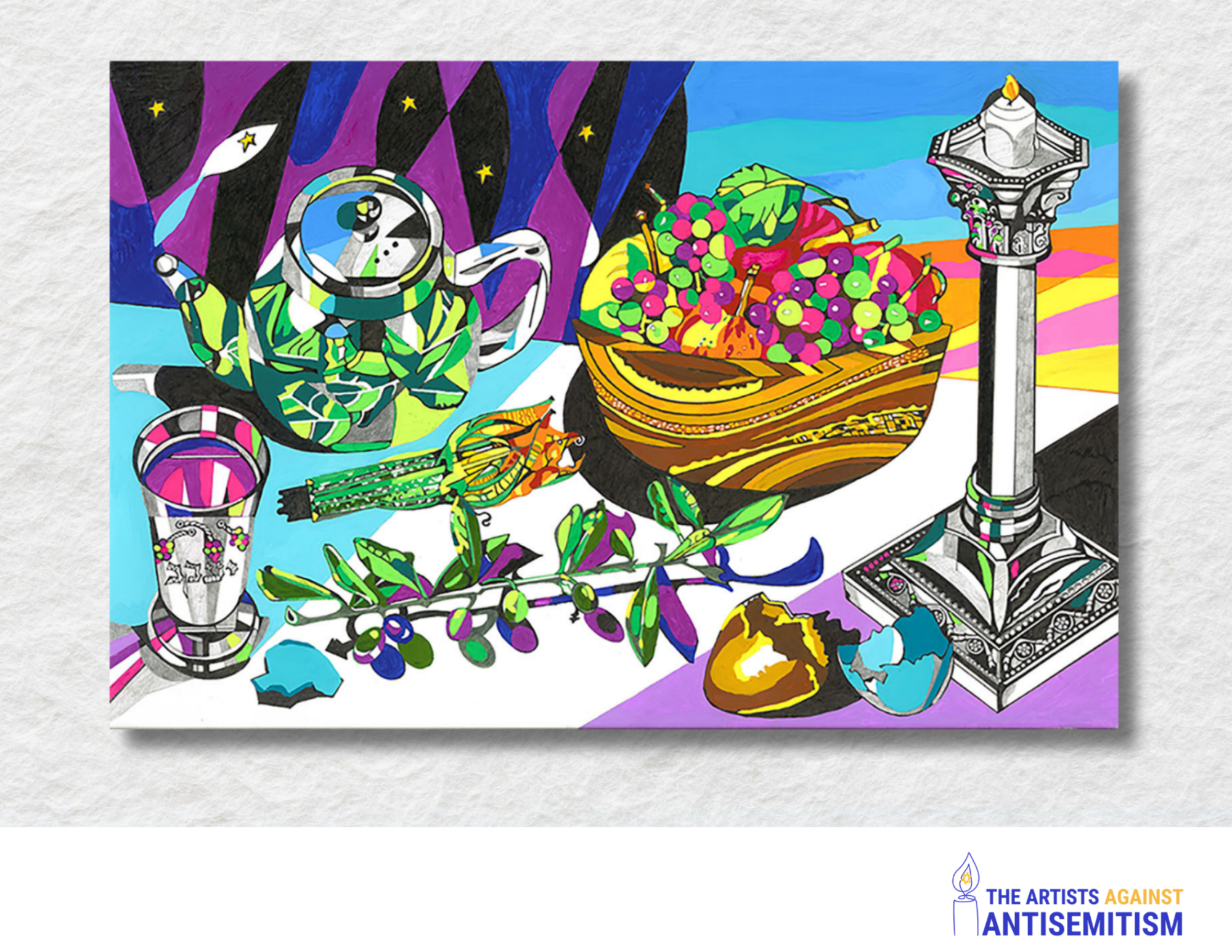
TABLEAU OF HOPE, Judy Dick
A note from the artist: What can I bring to the table, I asked myself. The Hebrew term for “still life” is tevah domem. The word domem means silent, hinting that inanimate items may hold a rich inner life. And so, this tablescape reflects different parts of my Jewish identity, including fragile hopes and dark shadows. I was inspired to be an artist by my artistic British grandmother. However, my art, forged in the optimism of America, is markedly different in style. Vibrant and fragmented, it does not match the classical oil landscapes painted by my grandmother. I include one of my grandmother’s Shabbat silver candlesticks, a wedding gift to her from my grandfather, who narrowly escaped the Nazis in Vienna. A friend’s wooden bowl, carved from American wood, reminds me that we are partners with God in creating beauty. My passion for our natural world is relayed by the images of a blossoming zucchini, ripe apples and grapes, and an olive sprig. These items also remind me of my Jewish identity, as they are each a key part of Jewish cuisine. Some are from my local farmers’ market, celebrating local New York State produce. The olive sprig is based on a sketch I made while visiting Greece recently. But it resonates for me, with its Biblical and Israeli connections. We can’t always, however, always escape the darkness. So, the little kiddush cup memorializes a British uncle who passed away long before I was born, when he was just a teen. He was a budding photographer, and I include his kiddush cup in order to honor his memory. Broken eggshells hint at the fragility of existence. Eggs are common in many cultures, including in Judaism. Their symbolism-- life and rebirth, mourning-- crosses religions and borders. Mint tea symbolizes hospitality. Its soothing flavor is made when its leaves are slightly crushed. And so, it reminds me that despite our tests, we remain resilient. Each day, we draw away the curtains of darkness and welcome the dawn.
About the artist: As an author and illustrator, Judy Dick combines her love of the written word with the visual arts. Judy is an illustrator of the Shalom Coloring adult coloring book series (Behrman House), as well as the author of the third book in the series, Shalom Coloring III: Animals of the Bible. She has conceptualized and illustrated several children’s books and educational products, including the Book of Legends for Young Readers series (URJ Press) and the Jewish Holiday Building Blocks Set, (WJ Fantasy Inc.) Judy is currently a Senior Content Developer at the Benchmark Education Company, where she works on educational fiction and nonfiction books, teacher resources, and supplemental literacy products for students. Previously, she worked on Geography Spin, The Holocaust Reader and Core Clicks, a digital reading program as an editor for Scholastic. Judy received a BA in Fine Arts from Yeshiva University and an AOS in Illustration from Pratt Institute, as well as a Masters in Education in the Teaching of Social Studies from Teachers College.
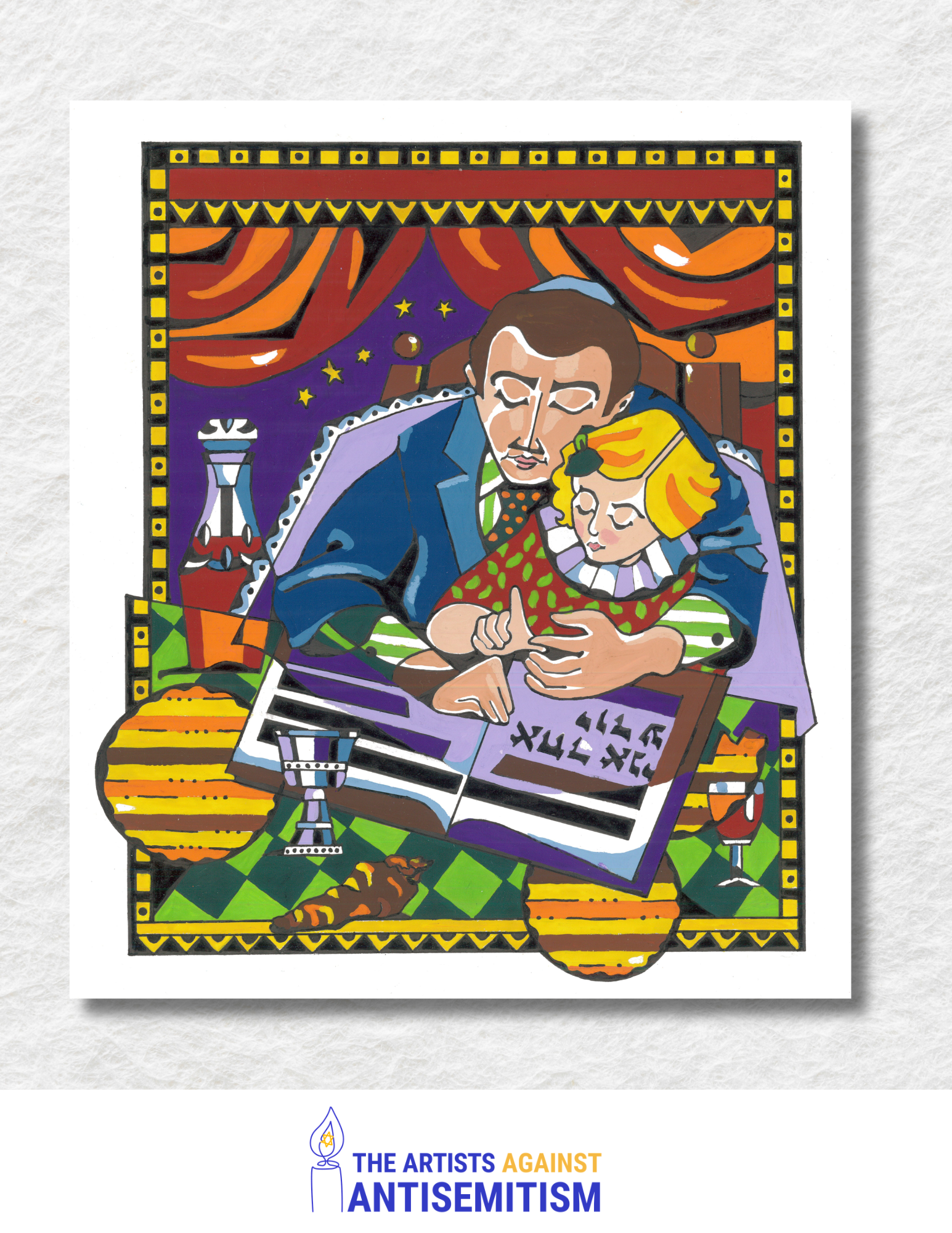
UNTITLED, Judy Dick
A note from the artist: As a child, I couldn't wait for the Passover seder. I was the first grandchild on both sides and therefore, I got to ask the four questions with no competition. This art reflects my childhood excitement about these seders and the passing down of tradition. My twist is the focus on passing down the religious tradition of text study to girls too. As an American Jew, I am fortunate to be able to study Hebrew and Aramaic texts due to a new, more feminist form of Jewish education. I embrace these expanded opportunities in this country.
About the artist: As an author and illustrator, Judy Dick combines her love of the written word with the visual arts. Judy is an illustrator of the Shalom Coloring adult coloring book series (Behrman House), as well as the author of the third book in the series, Shalom Coloring III: Animals of the Bible. She has conceptualized and illustrated several children’s books and educational products, including the Book of Legends for Young Readers series (URJ Press) and the Jewish Holiday Building Blocks Set, (WJ Fantasy Inc.) Judy is currently a Senior Content Developer at the Benchmark Education Company, where she works on educational fiction and nonfiction books, teacher resources, and supplemental literacy products for students. Previously, she worked on Geography Spin, The Holocaust Reader and Core Clicks, a digital reading program as an editor for Scholastic. Judy received a BA in Fine Arts from Yeshiva University and an AOS in Illustration from Pratt Institute, as well as a Masters in Education in the Teaching of Social Studies from Teachers College.
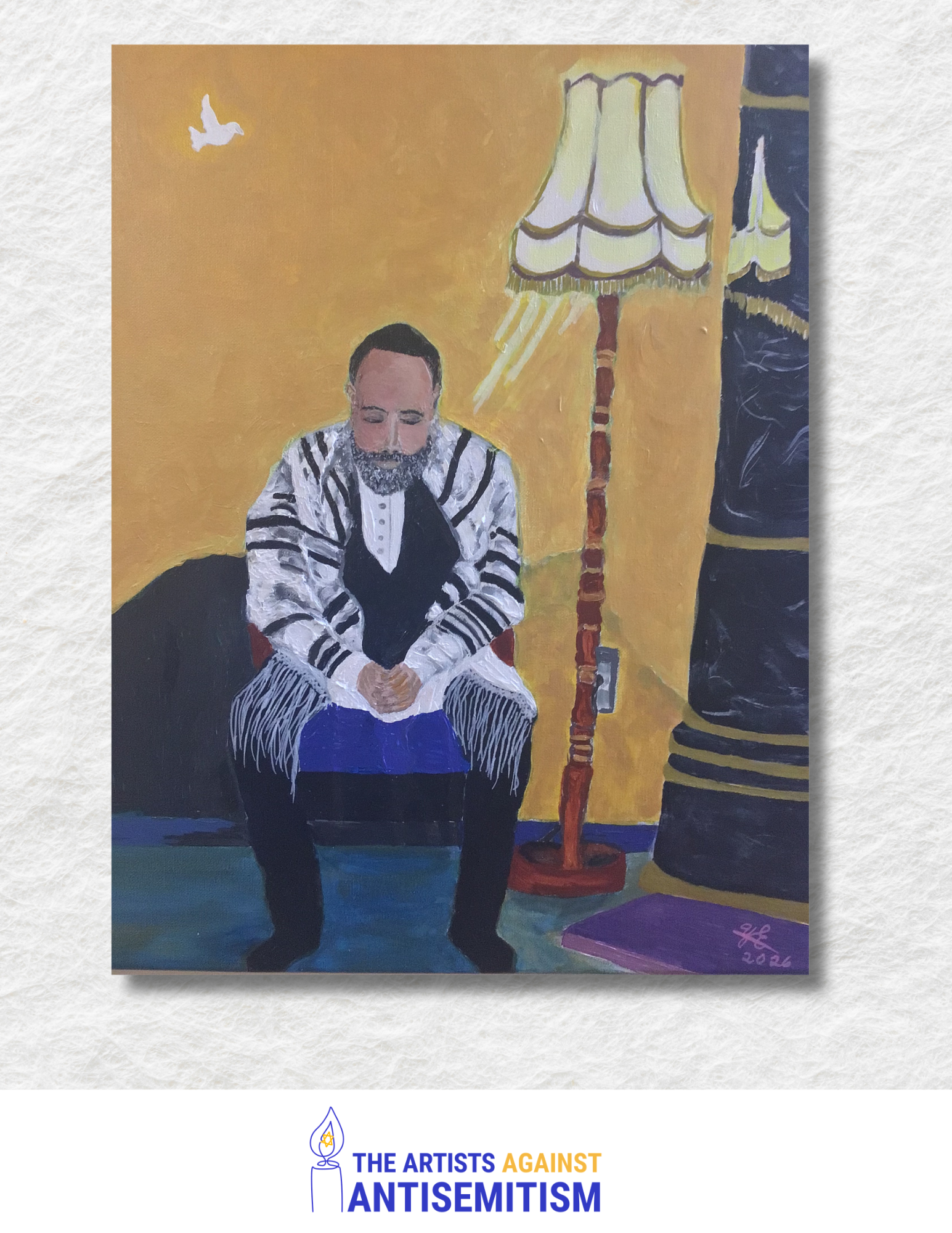
THE RABBI, Yolanda Goldsack
About the artist: Yolanda Goldsack is seventy years old and has been drawing and painting over thirty years now. She is a self taught artist and most of her work is mixed medium on canvas.
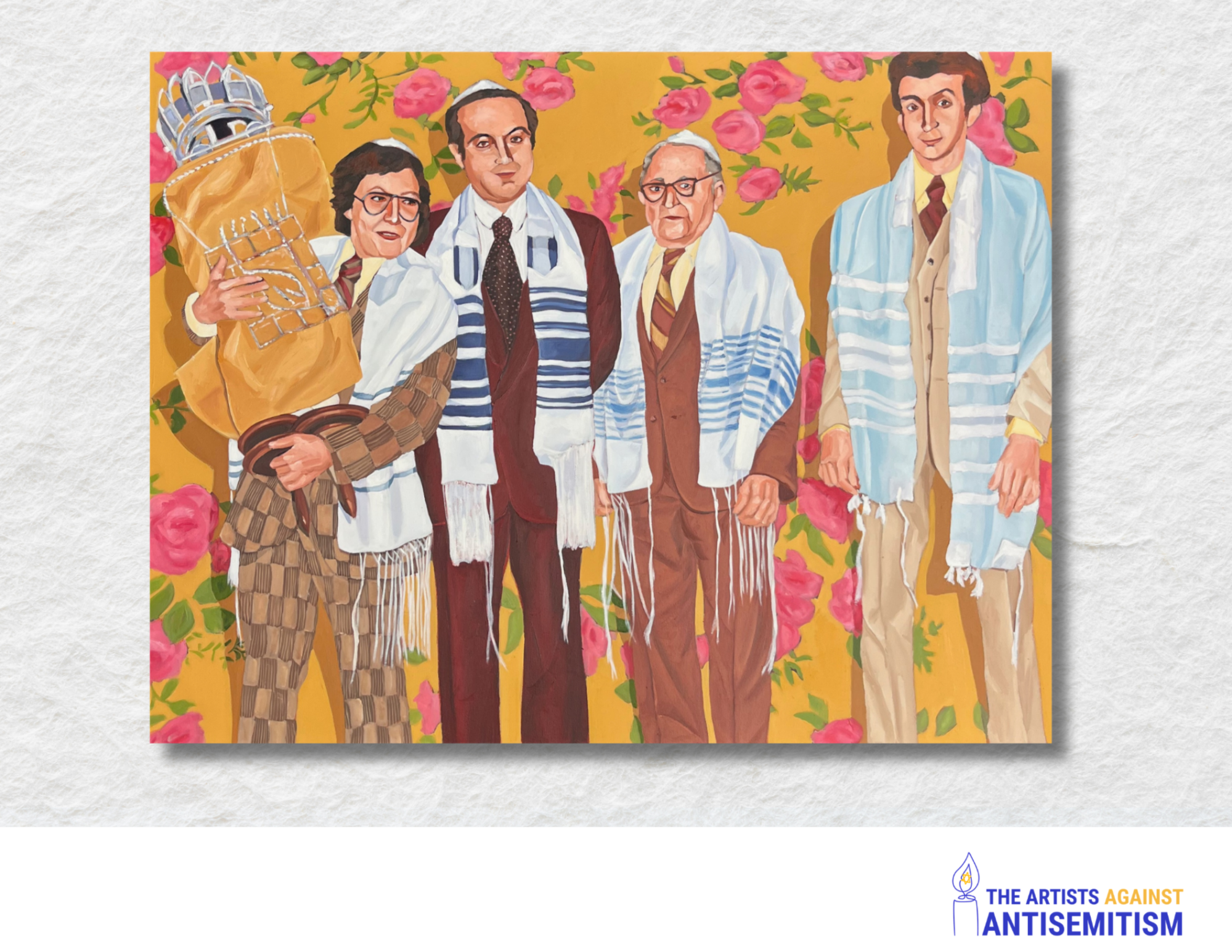
GOLDEN GENERATIONS, Jacqueline Kott-Wolle
A note from the artist: The L'Dor Vador (from generation to generation), is Torah passing ceremony at a Bar Mitzvah, often called a profound symbolic ritual where the Torah scroll is passed from grandparents to parents, and finally to the Bar Mitzvah child. This tradition highlights the passing of Jewish heritage and the child's role as the new link in the chain of tradition. When I look at this family, I see the story of one man through the various ages and stages of his life – how he looks as pubescent and awkward thirteen-year-old all the way through to old age. Life really is like a dream.
About the artist: Jacqueline Kott-Wolle lives in Highland Park, IL where she paints full time. In 2005, after moving to Chicago from Toronto with her family, Jacqueline fulfilled a long-time goal of developing her painting skills by studying at The Art Center of Highland Park. Using a fresh palette of color, Kott-Wolle currently paints in oils and focuses on capturing precious moments with her family and friends. Her most recent project, entitled “Growing Up Jewish - Art and Storytelling” is a series of 40 contemporary oil paintings and personal narratives exploring her North American brand of Jewish identity and how it evolved through five generations of her family. Jacqueline's work has been exhibited in numerous solo exhibitions including the Maltz Museum and the Houston Holocaust Museum and her paintings are in private and corporate collections throughout the United States, Canada, and Israel. Jacqueline has lectured for many organizations including The Museum of Jewish Heritage NYC, the United States Holocaust Memorial Museum among others. Her work has been featured in various publications including The Art Canada Institute, the Times of Israel, New American Paintings and CREATE! Magazine and most recently her work was cited by Art Historian, Professor Matthew Baigell in “Heritage – Jewish Artists in America Since 1900” by Syracuse University Press.
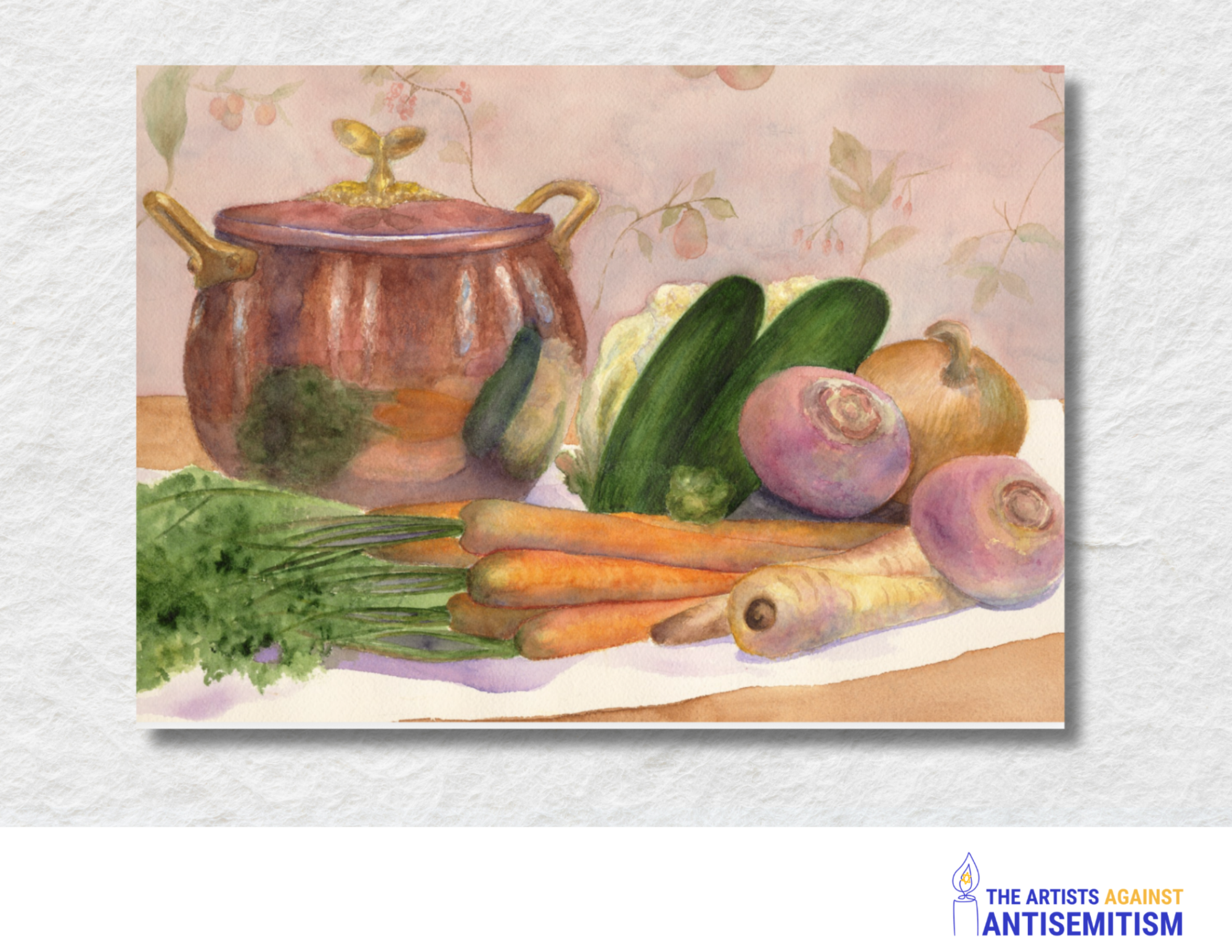
MEMORIES OF MY GRANDMOTHER’S KITCHEN, Felice Soifer
A note from the artist: My painting, "Memories of My Grandmother's Kitchen," was inspired by the wonderful aroma of chicken soup as I stepped into my friend's home on a Wednesday morning, as we had planned to paint together. She was cooking a large pot of chicken soup and I was overcome by the fragrant smells and immediately transported back in time to my earliest memories of my childhood and my wonderful Grandmother's kitchen. Nava's soup smelled exactly like my grandmother's! Every delectable spoonful of my Nanny Helen's soup contained oodles of love, hugs, warmth and kindness, along with her stories brought over from Russia. The chicken soup was a connection to her upbringing in Eastern Europe during WWI. Along with the majority of her family, the huge copper pot, in which she prepared her soup, had survived the pogroms of Russia.
About the artist: Felice Soifer is a Jew, a wife, a mother of four, and a grandmother of three. She is an artist, a home chef, a retired physician, a speaker, a volunteer. She considers herself a spiritual person and has a deep connection to nature. Her main interest in painting is botanical illustration. One of her greatest joys is going on nature walks with her grandchildren and seeing the world through their eyes. She is currently illustrating a Baby ABC book using botanical flowers and plants. She is up to “W is for Wisteria!” Like her Grandmother, she loves cooking Shabbat and Holiday meals and celebrating all the holidays with family and friends!
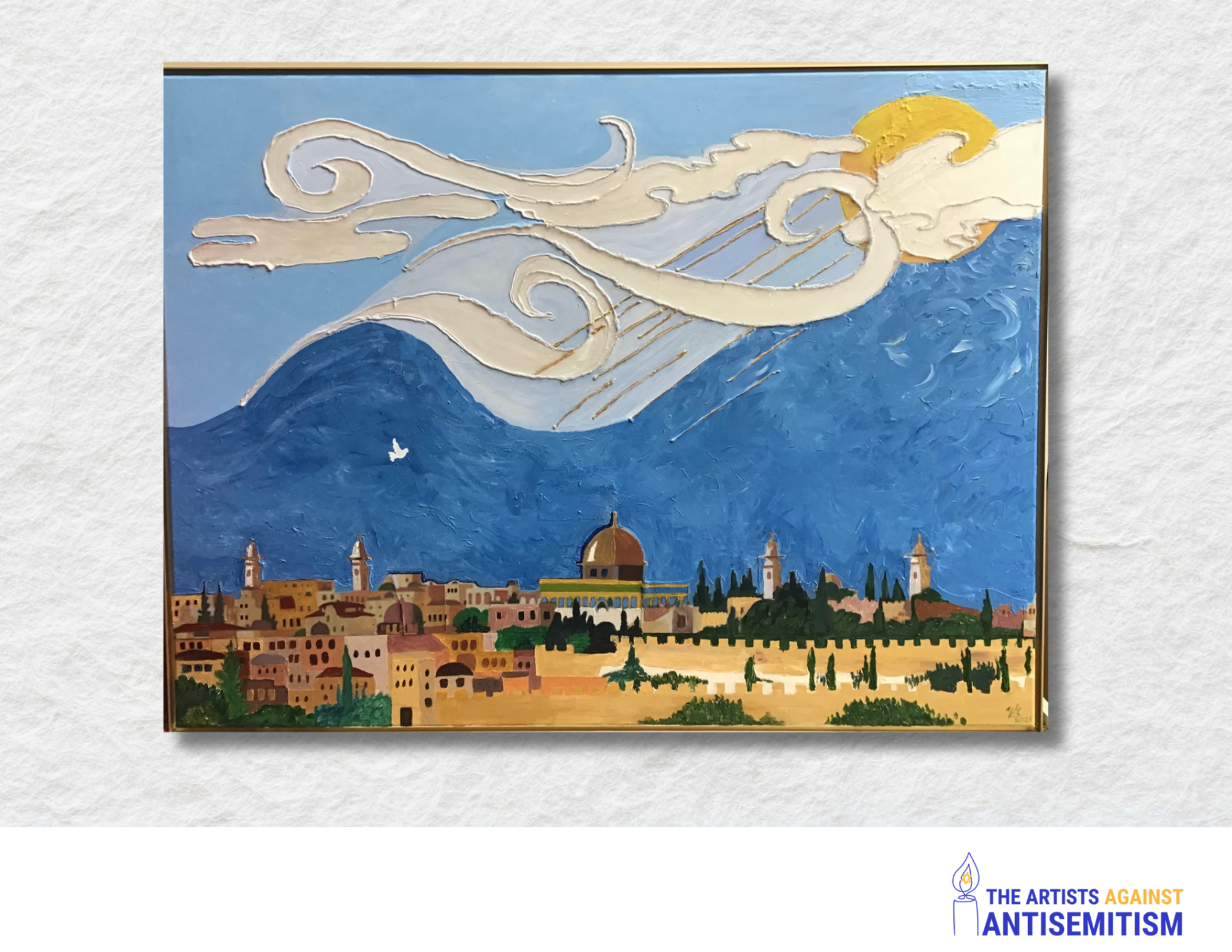
JERUSALEM, EVERY CLOUD HAS A SILVER LINING, Yolanda Goldsack
A note from the artist: My piece “Jerusalem, every cloud has a silver lining” is one of my most cherished works.
About the artist: Yolanda Goldsack is seventy years old and has been drawing and painting over thirty years now. She is a self taught artist and most of her work is mixed medium on canvas.
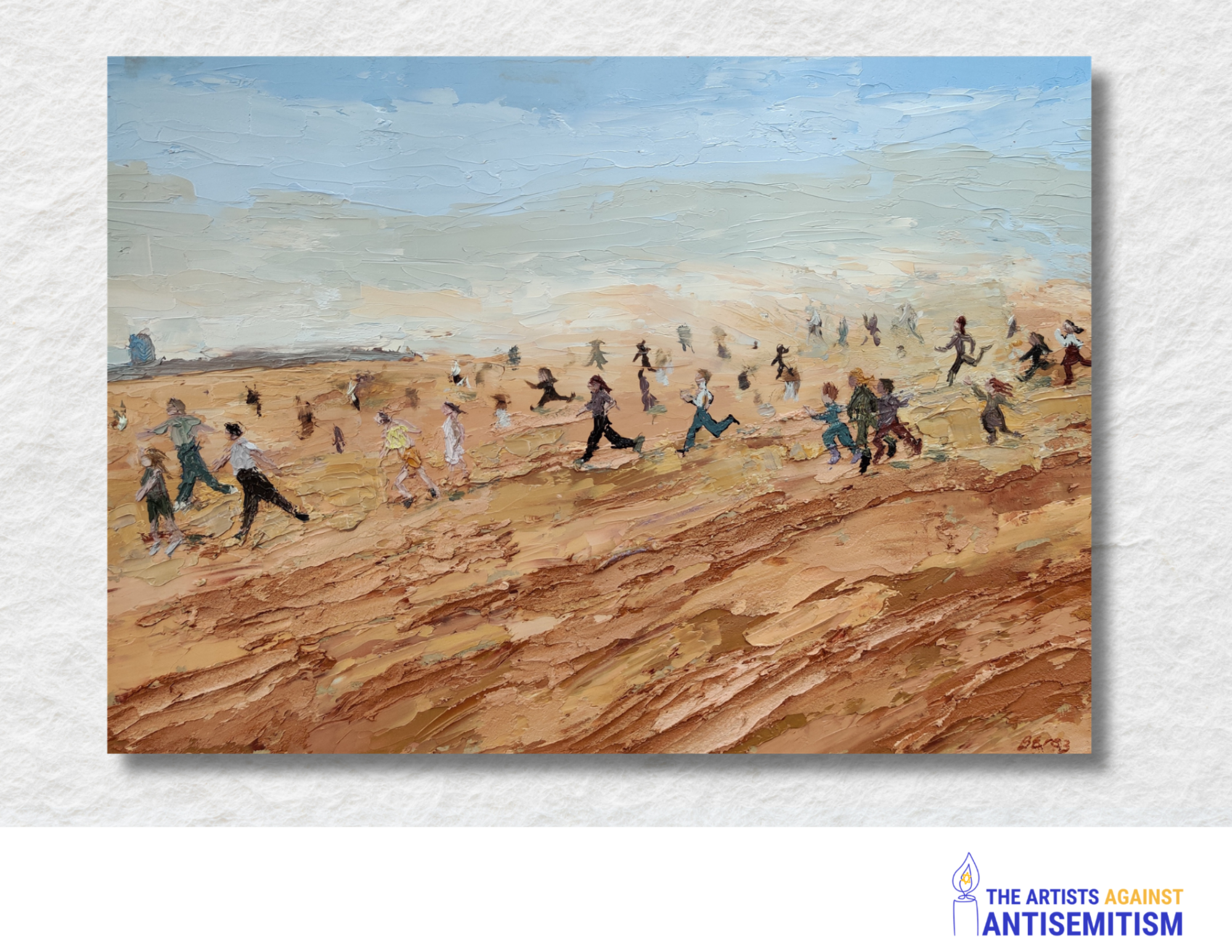
UNTITLED, Beth Erez
A note from the artist: Since October 7th, I have created several works of art related to the massacre itself, to those who survived and to those who did not. This particular artwork depicts the scene shown over and over again of the celebrants at the Nova Festival trying to escape.
About the artist: Born in America, Beth has lived in Israel since 1977. She worked as a marketing and business strategy executive in high-tech and became a full-time mixed media artist upon retirement. She began sculpting about 25 years ago and has since transitioned to working in a variety of media such as wood, glass, clay, metal and canvas– often at once antagonistic and complementary. About seven years ago she began painting in acrylic, later moving to oil, in an ongoing exploration of a more abstract style. In her paintings, she explores the harmonies and disharmonies of movement, material, and color, attempting to capture the mystery of image and material.
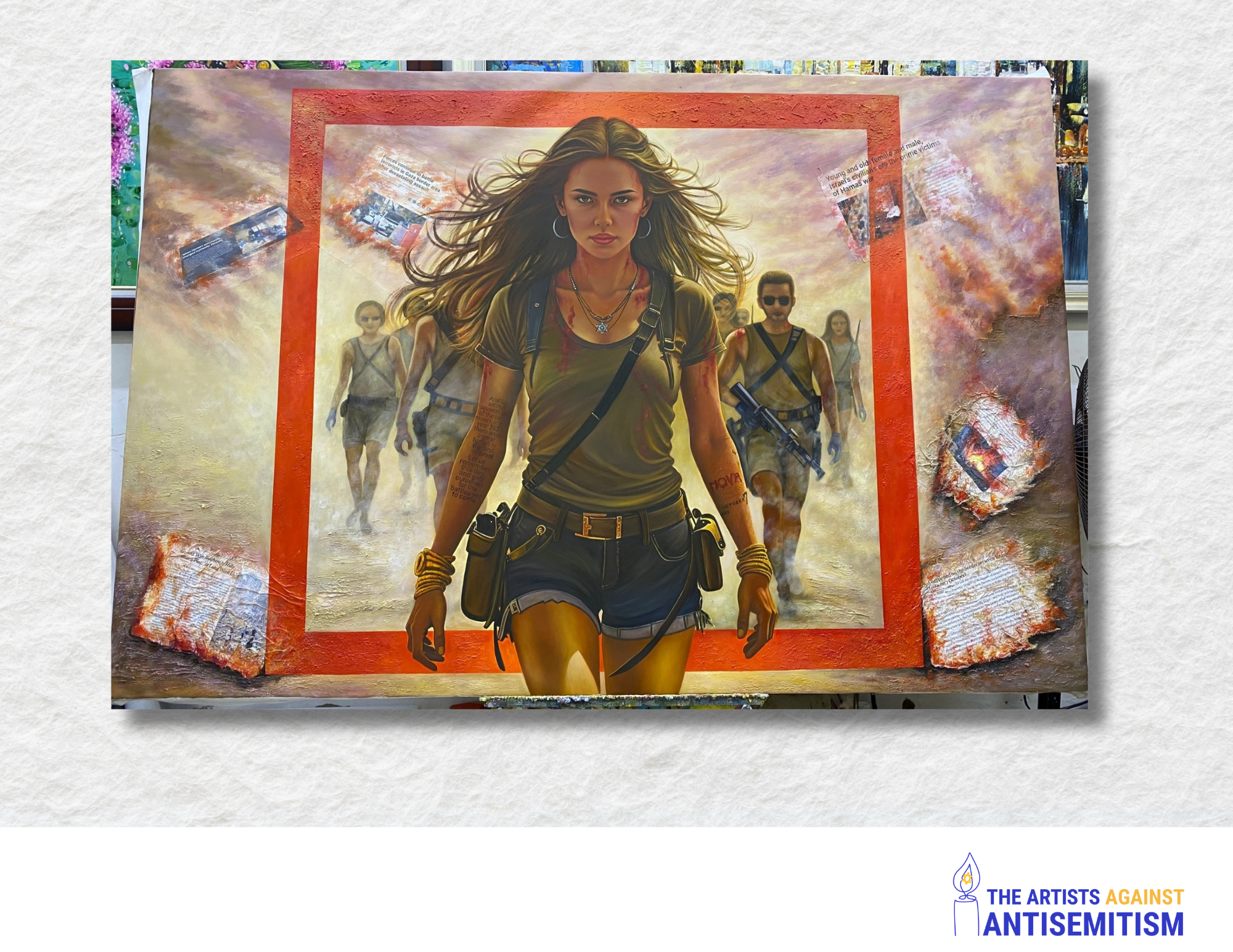
UNTITLED, OPHEAR
A note from the artist: This piece captures a resurgent landscape where ancient roots defy a scorched earth. In the wake of the October 7 massacre at the Nova Festival, the canvas metaphorically depicts a community transitioning from the gray ash of mourning to a vibrant, collective defiance. Thick, impasto strokes form a canopy of interlocking branches—representing a people who have outgrown the narrow boxes of victimhood. While shadows of rising global antisemitism attempt to crowd the frame, they are met by an unbreakable light emanating from within the grove. This is not a passive survival; it is a fierce reclamation. By weaving historical memory with a modern pulse, the work honors those lost by showing a community that has grown thicker-skinned and more luminous, unbowed by the storm.
About the artist: OPHEAR, a multidisciplinary artist, with a background in engineering, music and the arts, likes to channel his ideas through daring art that pushes the boundaries of visual creativity. He has a passion and joy for creating a wide variety of paintings, constructs and sculptures in varied formats, frequently inspired by surrealist, impressionist, pointillist, and even Hindu/Buddhist and tribal or futuristic art. He uses a mix of paints, resins, metals and fabrics often utilizing novel techniques to achieve unique dimensional results.
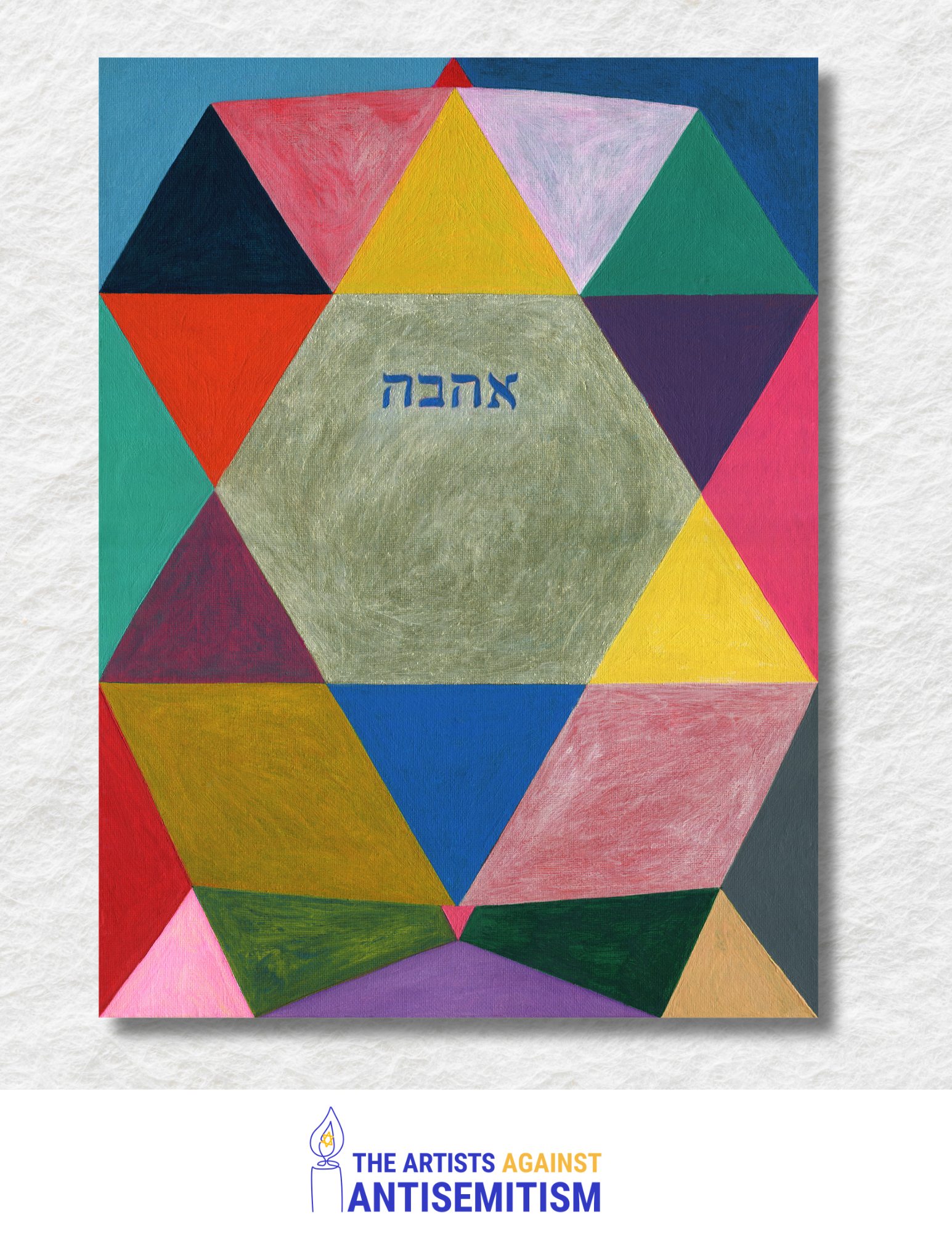
AHAVA, Ivonne Lippmann
A note from the artist: The work Ahava was created after the Hamas massacre of October 7 in Israel. Several friends of mine were killed, and others were called into the army as soldiers. For almost three months I felt emotionally paralyzed and unable to work. When I slowly returned to painting, this piece emerged. Through my studies of Kabbalah, I became deeply interested in the spiritual symbolism of the Star of David and the Hebrew language, where each letter carries meaning and energy. In Ahava (the Hebrew word for “love”), the letters and the structure of the star come together as a kind of symbolic container. I created this painting as a personal “power box”—a space of strength, protection, and resilience during a very difficult time. The work later expanded into shirts, bags, and fine art prints, allowing the symbol to travel beyond the canvas. The original painting is currently shown in a group exhibition in Rotterdam. Because of my strong connection to Israel and Jewish culture, it has sometimes been challenging as an artist to find spaces for dialogue and exhibitions. This work remains very important to me; I keep a large fine art print of it in my studio, where it reminds me every day of inner strength and continuity.
About the artist: Ivonne Dippmann is a Berlin-based interdisciplinary artist working across textiles, mural art, painting, and fashion. Born in Karl-Marx-Stadt/Chemnitz, she studied Visual Communication at the Berlin University of the Arts, graduating with a Diplom and Meisterschüler distinction, and later completed an MFA at Bezalel Academy of Arts and Design in Tel Aviv. Her practice explores processes of transformation, repair, and material renewal. Working between art, craft, and design, Dippmann investigates how textiles, surfaces, and spatial interventions can carry personal and collective memory. Through layering, stitching, painting, and reassembling materials, she creates works that reflect cycles of fragmentation and regeneration. Often incorporating remnants, found materials, and traditional textile techniques, her work reflects on resilience, cultural continuity, and the transmission of knowledge and memory across generations. The act of making becomes a gesture of repair—both materially and symbolically. Having lived and worked in both Germany and Israel, Dippmann’s practice is informed by cultural dialogue and historical awareness. Her works translate themes of memory, loss, and continuity into tactile visual languages that speak to responsibility, remembrance, and the passing of stories from generation to generation.
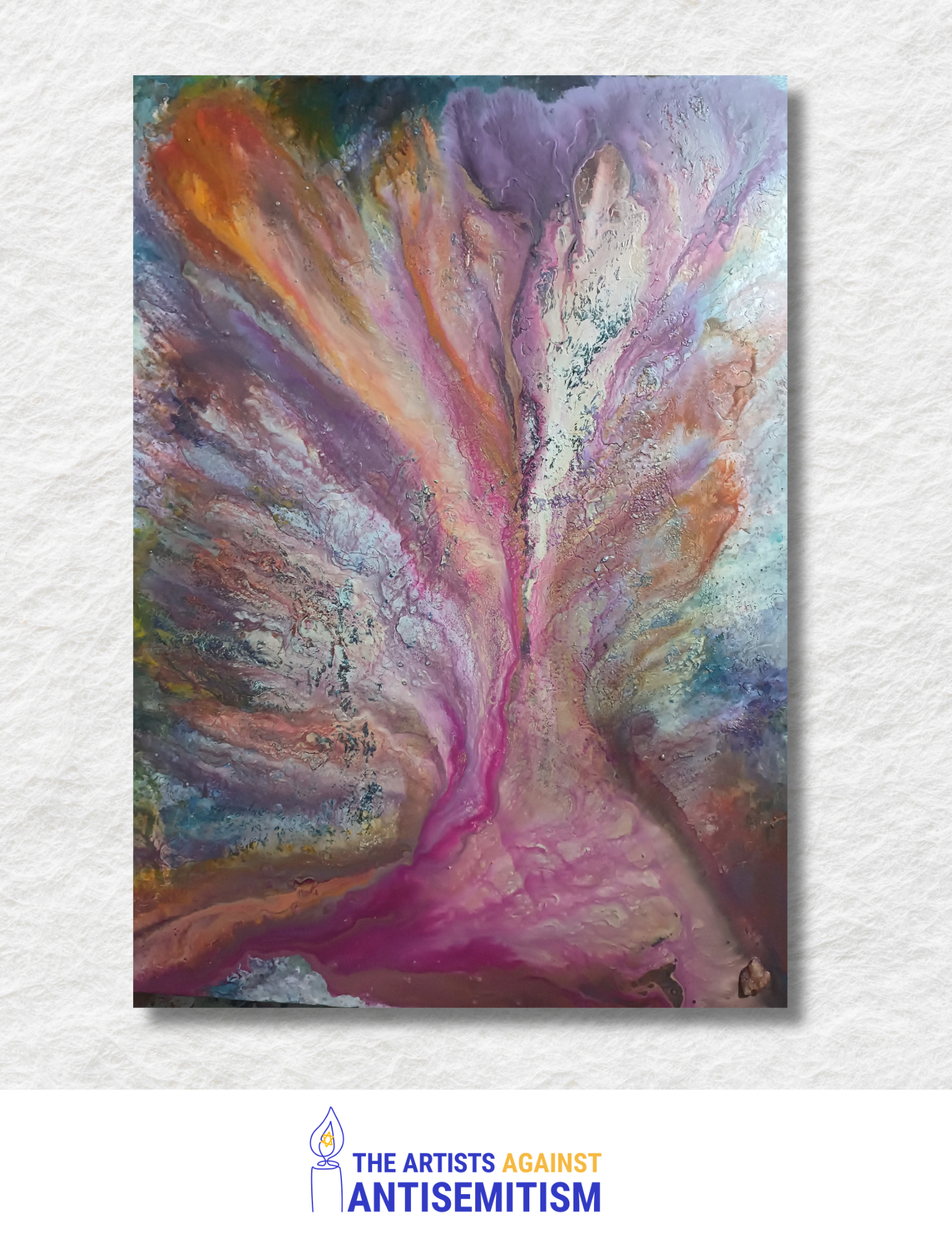
LIVING COLORS, Leon Chartarifsky
About the artist: Leon was born in Mexico City from grandparents fleeing East Europe due to antisemitismin the 20th century. From early childhood he showed interest in painting. He now resides in Southern California.
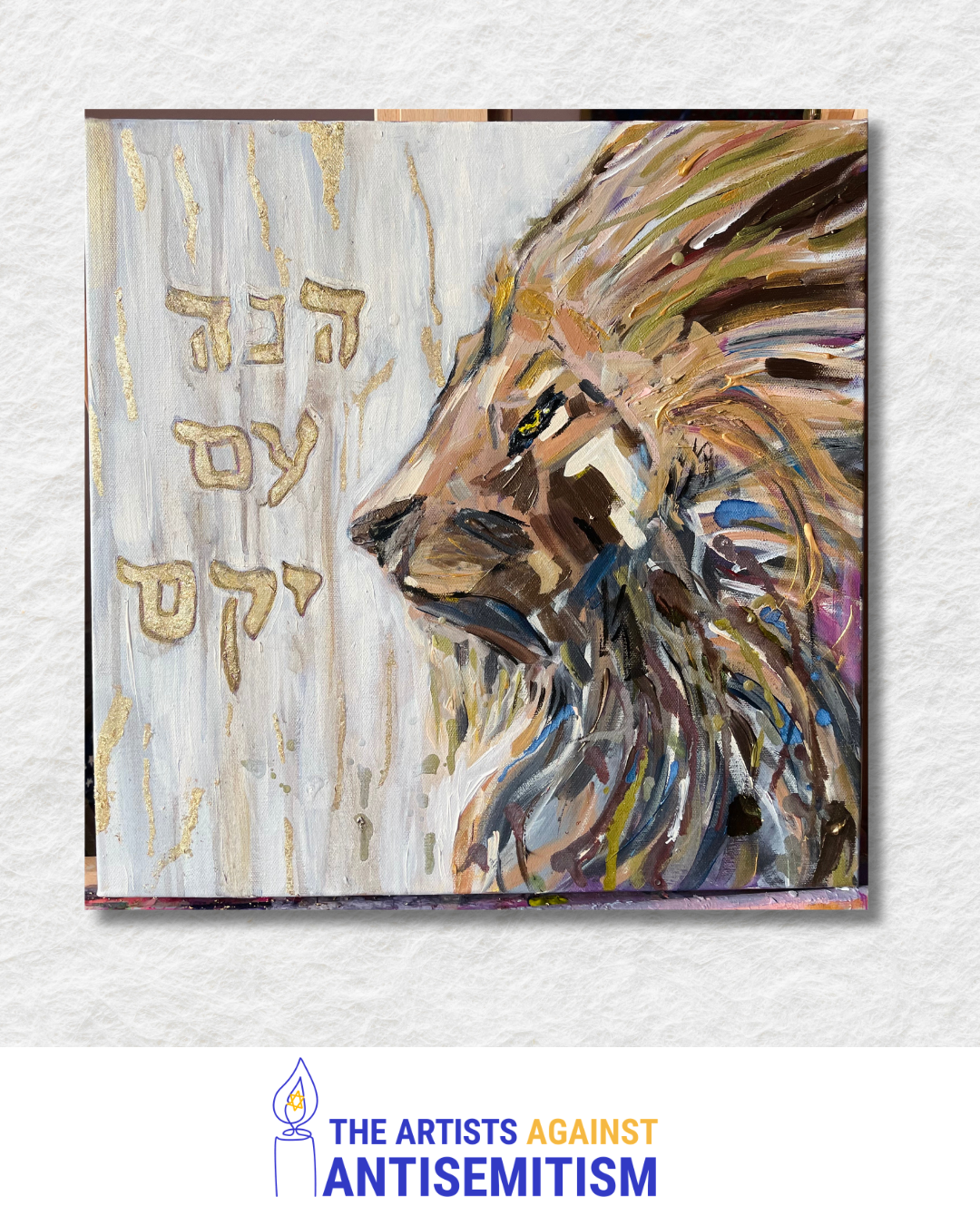
BEHOLD A PEOPLE WILL RISE, Tirza Menkes
A note from the artist: Behold a People Will Rise - Evokes strength in our identity. This piece speaks to a new generation, rooted in history, but no longer defined by fear. We are not victims.We are the generation of Jews who refuse victimhood and embody defiance. Like a lion we rise, declaring our strength.
About the artist: Tirza is a visual artist drawn to color, texture, and emotion. Her work explores the intersection between the physical and the spiritual, where layers of paint become a language, a memory, and an invocation. Originally from Southern California, Tirza now creates in Florida while raising her 5 children. Influenced by spirituality, memory, and her heritage, Tirza's work explores the tension between self and soul.
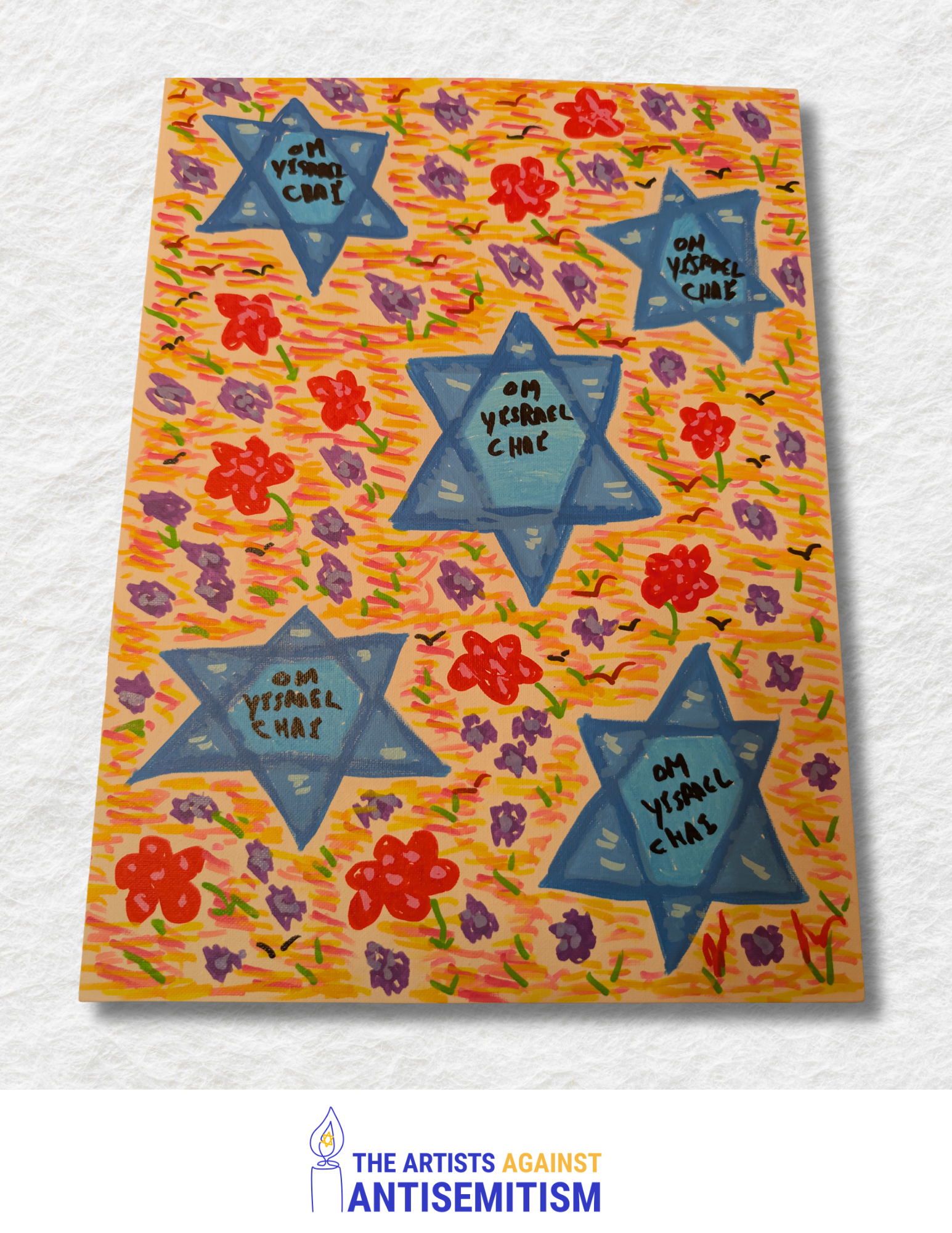
UNTITLED, Judith Berman
About the artist: Judith Berman grew up surrounded by art And was encouraged to build her creative skills From an early age. Judith earned badges for arts and crafts in girl scouts. Judith has embraced art And its holistic ability to help her express her inner demons. She has always loved color especially vivid colors. Her favorite colors are purple turquoise and magenta. Judith has had anxiety and depression and uses art to calm her anxiety and ease panic. She lives to surround herself in color. She graduated Queens college and has computer skills. She works in impressionistic and abstract art in pastels craypas crayons markers and acrylic. She loves flowers and cats and enjoys creating beautiful colorful art pieces including abstract design. Judith has work in several shows and several galleries has been awarded and has curated art shows.
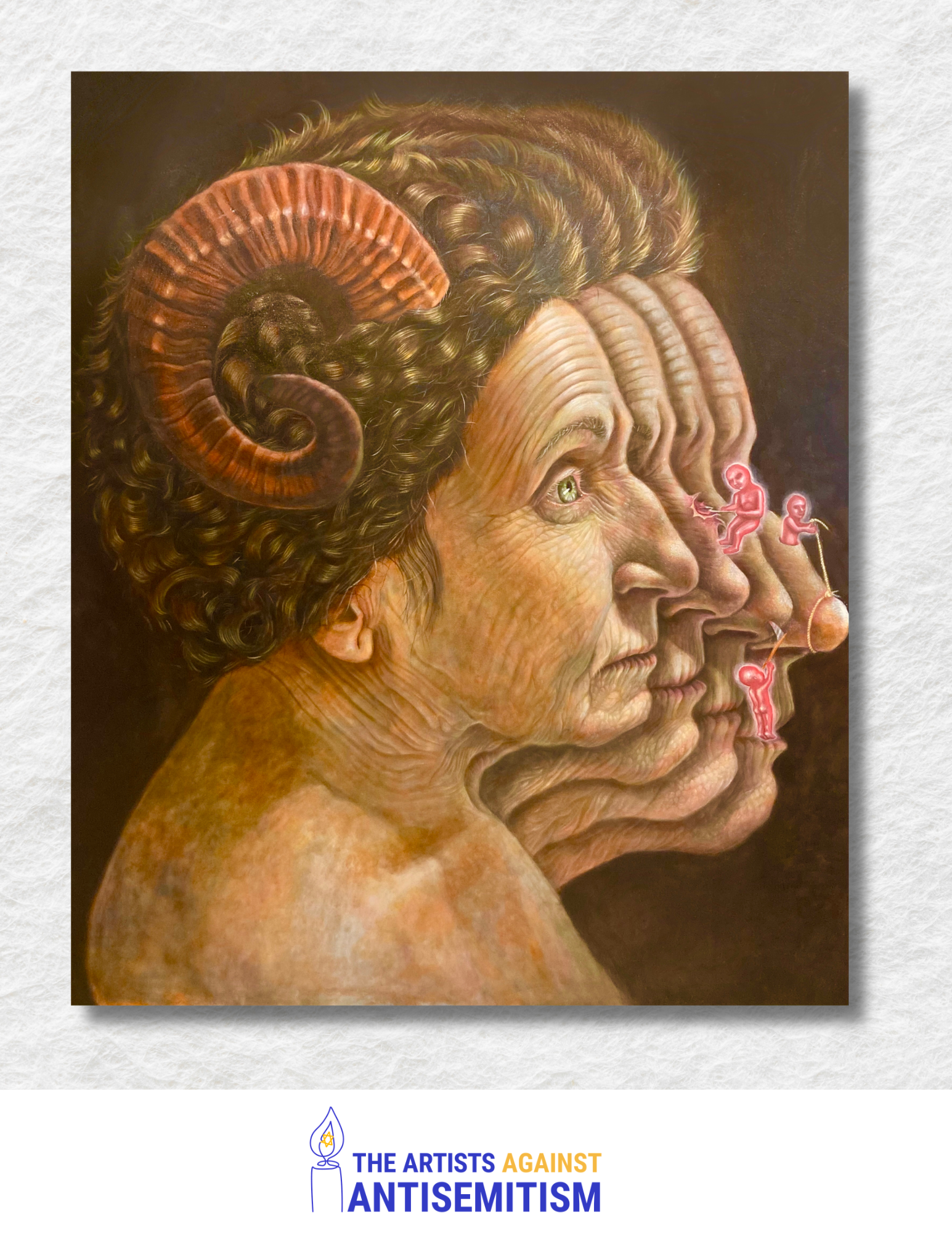
UNTITLED, Tslil Tsemet
A note from the artist: Through art, I examine the human species, the social and cultural values that we bond ourselves to, and the collective ideals we follow. I'm inspired by a verity of cultures, religions, mythologies, and philosophies. I like to create art that stimulates many parts of the brain at the same time; that is simultaneously funny, disgusting, attractive, twisted, sad, happy, scary, mysterious, confusing, beautiful, and ugly — just like life. I use painting to challenge the existing social and political norms. it's both sarcastic and optimistic, and has been often described as provocative. I believe art has fast, immediate access to the viewer subconscious mind, and it has the ability to help us evolve, expand and shift out perception.
About the artist: Tslil Tsemet (b. 1988) is a painter and multidisciplinary artist. She grew up in a small town in the northern Israel , near the Lebanon border, in an environment shaped by political tension and cultural intersections. From an early age, she was drawn to art as a means of exploring identity, conflict, and the fluidity of social structures. Encouraged by her education at an experimental open democratic school, she developed a strong foundation in free thought, activism, and creative expression. Instead of following the conventional path of military service, she went straight to art school, earning her BFA in Conceptual Art from Bezalel Academy of Art and Design, Jerusalem, in 2011. Living in Jerusalem—a city layered with religious, political, and cultural complexities—deeply influenced her artistic perspective, inspiring her to challenge societal norms and explore themes of global connectivity. After several years of living and creating in Tel Aviv, where she encountered increasing artistic censorship, she relocated to the U.S. in 2014 to fully pursue her career as an artist. The transition as an immigrant artist was filled with challenges, and she worked as a tattoo artist to support her practice. She later earned her MFA from the New York Academy of Art in 2023. Tsemet’s work has been exhibited in solo and group exhibitions across the U.S. and internationally, including in New York, Los Angeles, San Francisco, Denmark, and Israel.
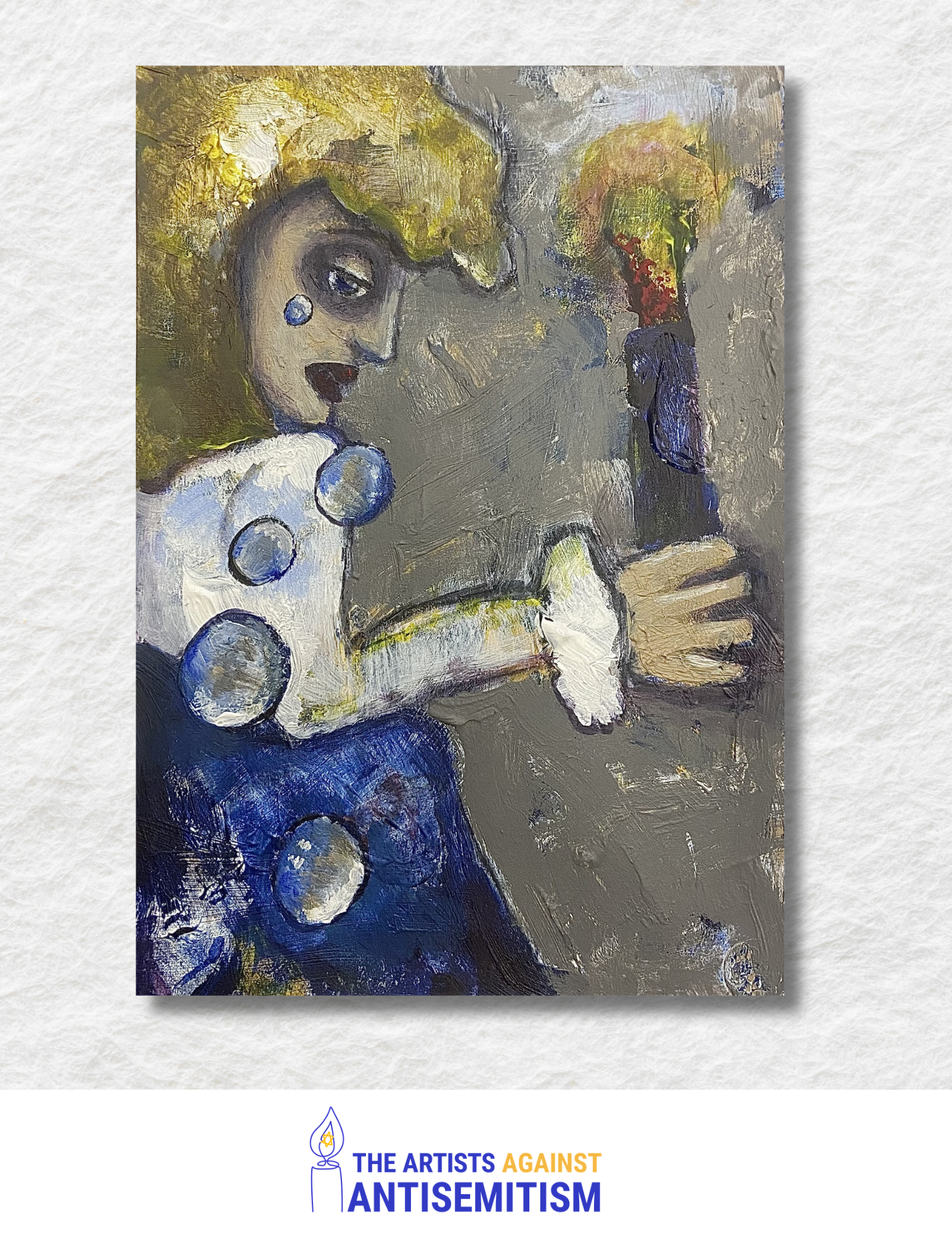
UNTITLED, Sharon Finzi
A note from the artist: Because I am fascinated by narrative, it is through intuition, that I pull out the emotions that breathe behind each beautiful body to capture the vigorous journey that is in our every day. I don’t shy away from the murky sadness because it is the pain that helps us grow and understand the boundaries of our spirit. Only once you feel discomfort can you then appreciate life’s pleasures. The most exciting moment in my process is when faces begin to emerge from the canvas - when the abstract becomes personal. I discover faces and bodies that come alive on the canvas and strive to bring out a deeper connection with the viewer. I investigate the soul through figurative, stylized drawings, acrylic, and mixed media paintings that celebrate the quirks which makes each of us unique, eccentric individuals. Inspiration finds me everywhere, and I’m always seeking to infuse my figurative work with color, sentiment, and vitality. These images are meant to take you on a journey that provides (or provokes) significance and authenticity in the most impactful way.
About the artist: Sharon Finzi is a West Coast–based acrylic and mixed media artist whose work reflects a lifelong connection to creativity. A self-taught, late-blooming painter, she draws from years of intuitive exploration and culturally rich experiences to transform the rhythms of everyday life into expressive visual narratives. Guided by the belief that authenticity exists in life’s “gray areas,” Sharon embraces nuance, imperfection, and emotional honesty. Her process is intuitive and responsive, celebrating the quirks and complexities that make each individual unique. Influenced by artists such as Marc Chagall and Chaïm Soutine, as well as contemporary voices, her work continues to evolve through ongoing inspiration. Deeply fascinated by human nature, Sharon explores the outward-facing identities people construct and present to the world. Through stylized forms, expressive shapes, harmonious color palettes, and loosely rendered landscapes, she seeks to capture both the visible and unseen layers of her subjects. Her work invites viewers into a space of connection, where vulnerability, insight, and emotion are shared. Sharon’s work has been featured in juried exhibitions, and she maintains active memberships in multiple art associations while contributing to community-based projects. As her presence grows, she continues to build meaningful connections with collectors and audiences drawn to her distinctive voice and individuality of her work.
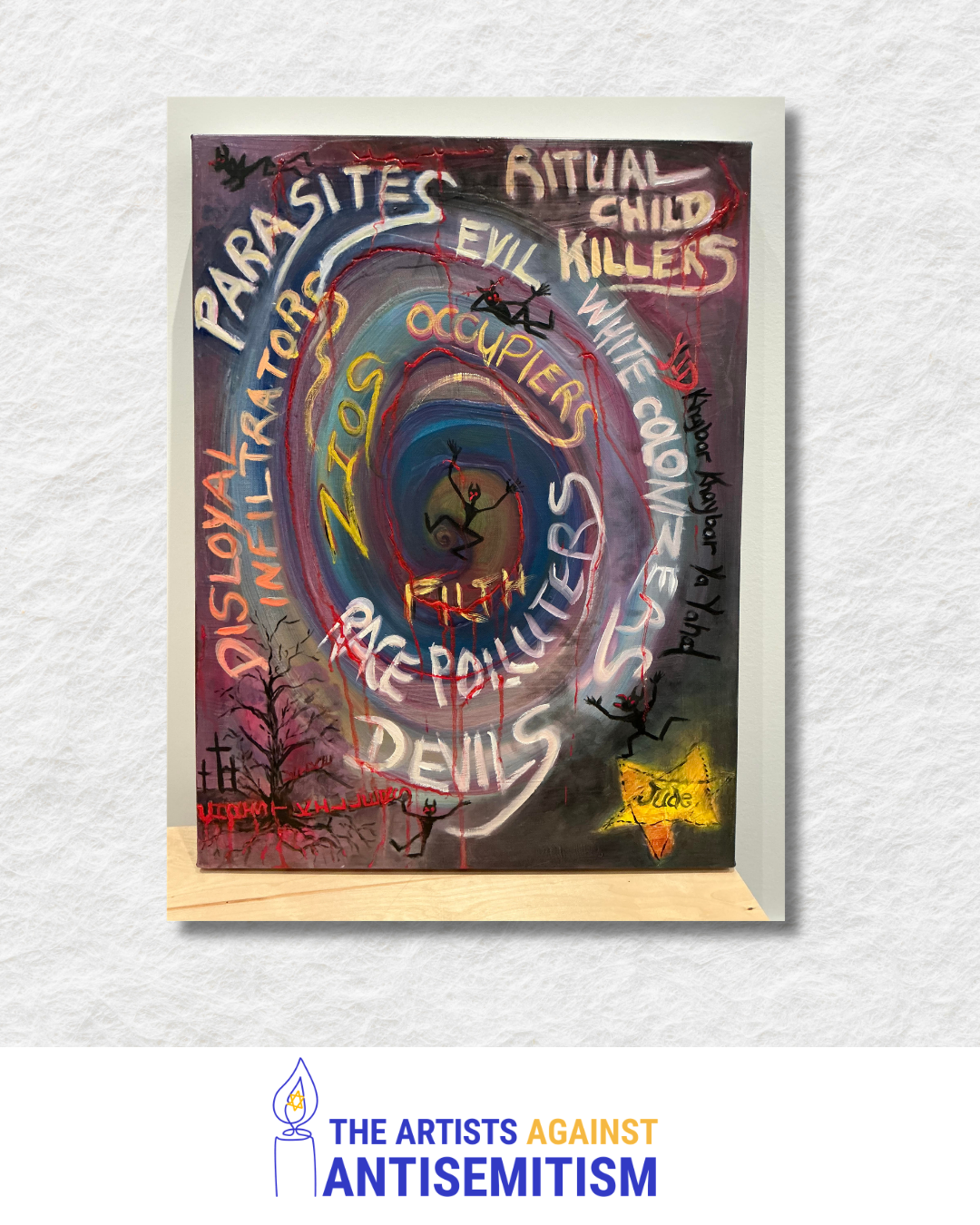
UNTITLED, Elise Ginsburg
A note from the artist: My work has generally been spiritual, grounded in an exploration of nature, mysticism, and the unseen. However, the recent rise of antisemitism, globally and within my own community, compelled a shift. Through conversations, observation, and reflection, I began to understand antisemitism not only as an external force, but as something more insidious: like a virus that moves through cultures, relationships, and even internal landscapes. It shapes perception, distorts reality, and leaves traces across generations. This painting emerged from a need to make that invisible presence visible. To externalize it. To name it. And, in some sense, to release it. The act of painting became both inquiry and intervention—a way of examining how antisemitism has lived around me and within me, and of reclaiming space from it. In bringing it into form, I sought not only to understand its impact, but to loosen its hold.
About the artist: Elise is a mutt as she is American, Canadian, Jewish, and Scottish. She identifies as Jewish; it is how she lives, practices, and understands the world. Her husband and children are Jewish. Both sides of her family carry histories of diaspora and displacement, and her family was directly touched by the Holocaust. In her own life, antisemitism has not been abstract: Holocaust deniers have come to her children’s Hebrew school with guns and have targeted the JCC her son attended. She now lives in a community in which Jew hatred is emerging with the current escalatory language. Previously, she practiced as a neuropsychologist in Canada and the US. Today, she devotes herself to painting. Her work draws on Jewish mysticism, Hebrew letters, and the natural world, e.g., landscapes, light, and elemental rhythms. Recently, antisemitism has entered her work as she seeks, through painting, to confront it and move it out of her life.
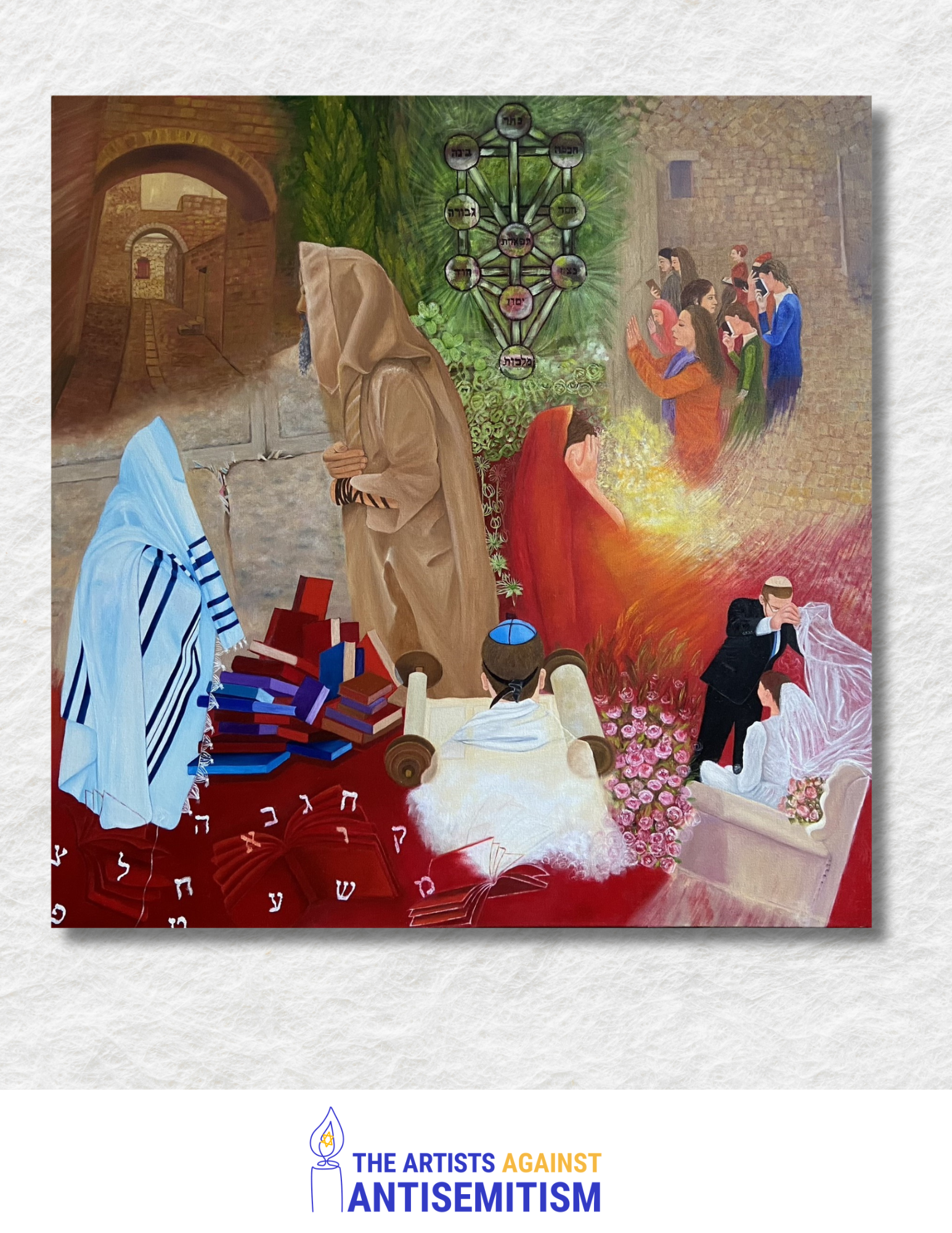
JERUSALEM: BODY AND SOUL, Heidi Feldman
A note from the artist: This painting represents the foundations of the Jewish people: Jerusalem as our eternal land and our millennia-old culture—rituals, spirituality, celebrations, customs, and traditions. Thus, Jerusalem: Body and Soul represents the strength that unites us, with the commitment to transmit it to future generations.
About the artist: Heidi Cudek Feldman is 71 years old and lives in the city of São Paulo, Brazil. She has a degree in Psychology, but since childhood has had an interest in painting. In 1992, she began studying in this field with the goal of creating and improving her compositions. Drawing is the foundation of her work, and she enjoys drawing and painting with many details, as well as using vibrant colors that symbolize her feelings and emotions. Her strongest identification is with the theme of Jewish Culture, as it is part of her life philosophy and religiousness. Currently, her goal is to commercialize her artwork and share emotions through art. To learn more about my work, visit www.heidifeldman.com.br.
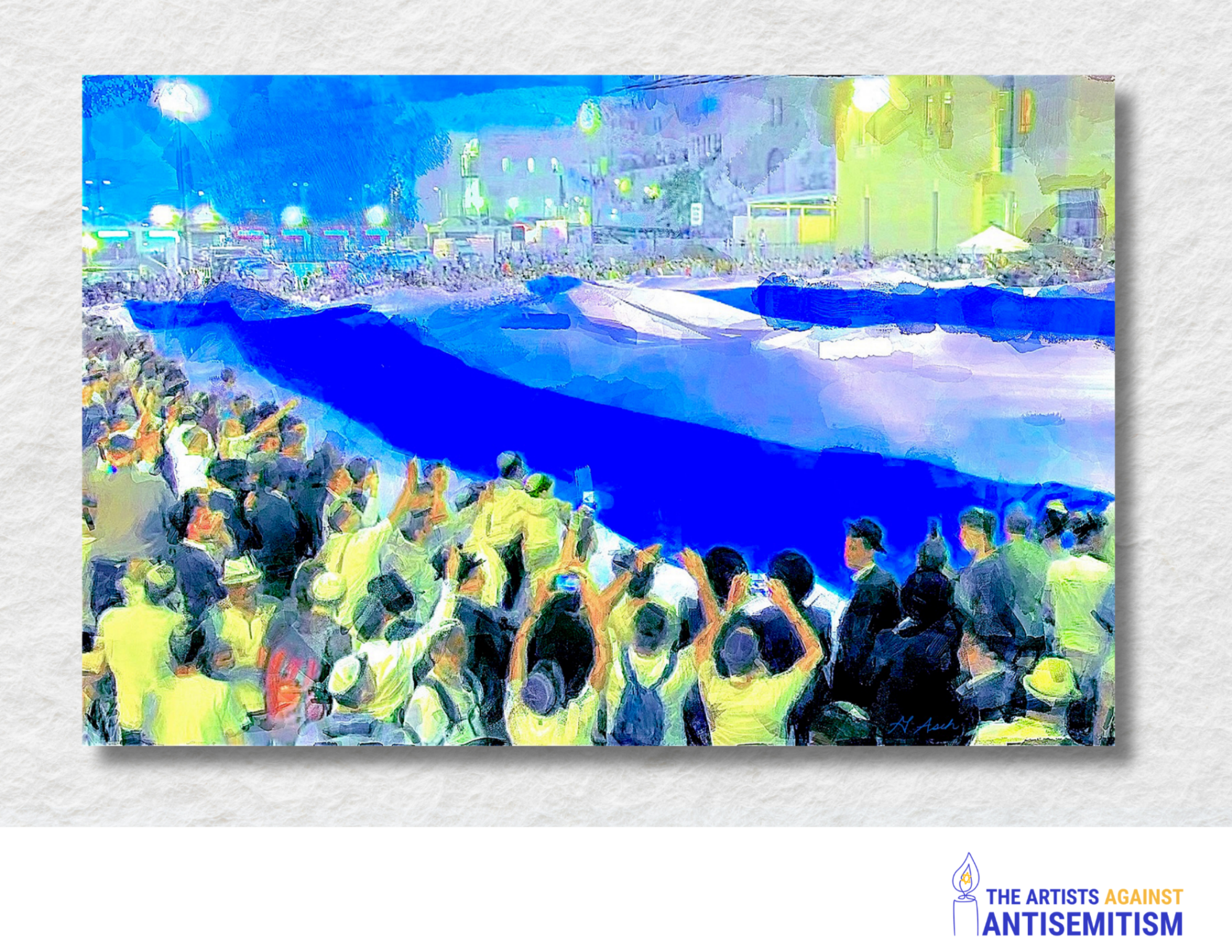
L’DOR V’DOR, Gayle Asch
A note from the artist: L’dor V’dor is both a declaration and a responsibility — a living bridge between past and future. In this work, created in response to Jerusalem Day 2025, I sought to capture not just a moment of celebration, but the transmission of memory, identity, and belonging across generations.
At the heart of the composition are two young boys lifted onto their father’s shoulders. Their father’s act of lifting them is practical — to give them a better view — yet it is also metaphorical. He raises them into history, into heritage, into the collective story of the Am Yisrael. The young boys are not merely observing a celebration, they are inheriting it.
The crowd forms a vibrant tapestry of generations — elders, parents, youth — unified in song, movement, and color. The dynamic blues and luminous light evoke both the Israeli flag and a spiritual atmosphere, suggesting transcendence beyond the physical space. The painting’s layered textures mirror the layered history of Jerusalem itself - ancient stones beneath modern voices, memory beneath movement.
About the artist: Gayle Asch is a NYC based artist and art educator. A School of Visual Arts graduate, she explores the link between digital and traditional media, often blending the two by adding paint to digital files printed on vinyl or canvas. Each originates with a photographic image created using a variety of software and techniques. The goal of each is to blur the line between digital and real paint, with composition, narrative and colorplaying equally important roles in each artwork.